

Views: 0 Author: Site Editor Publish Time: 2026-04-23 Origin: Site
You want to learn the main steps for installing a modular cleanroom. You need to follow a step-by-step process to make sure it works well and follows rules. Today, almost half of new cleanrooms use modular building methods. This shows that more people are choosing modular over old ways. Good HVAC and cleanroom systems are very important for the best results. When you look at the steps, remember that modular cleanrooms can cost a lot. You may also face some problems.
Check the site carefully to make sure it fits your cleanroom needs. This helps you avoid expensive errors and keeps the design correct.
Collect detailed information about equipment and utilities. Good data helps build a cleanroom that matches your work and saves time.
Plan the cleanroom layout with care to help workflow and stop contamination. A smart design makes work easier and keeps people safe.
Follow rules like ISO and GMP to stay safe and follow laws. Keeping these standards helps your team and customers trust you.
Test and check your cleanroom often after it is built. This makes sure it works right and keeps the space safe for important work.
You begin by checking the space for your modular cleanroom. Look around and see if the area is right for your needs. Check if the floor is strong enough. Make sure the ceiling is high enough. Find out if people and materials can move easily. Think about how you might change or grow the space later.
When you look at the site, focus on these things:
How much your team knows and their skills
How well the cleanroom parts are made
How long it takes to get the parts
Good design and customer help
Ways to make the project fit your needs
A price that works for you
If you do not check the site well, you may have problems. You could buy a cleanroom that is too big or fancy. You might have to use a basic design if you run out of time. This design may not work for your process. If you and your engineers do not trust each other, costs can go up.
After you check the space, you need to find out what your cleanroom needs. This helps you know what will work for your process. Gather facts about your tools, power, and what the room must do. Talk with your team and sellers to get real numbers.
Data Type | Description |
|---|---|
Equipment Database | First facts that show what power and space you need. |
Utility Requirement Summary | List of what each tool needs to work. |
Equipment Layout | Plan for where things go in the cleanroom. |
Utilities and Raw Materials | All power and supplies needed for normal work. |
Environmental Parameters | Room rules, sizes, and what support tools you need. |
Actual Consumption Data | Sellers should give real use numbers, not just guesses. |
You use these facts to make a cleanroom that fits your work. Good planning helps you save money and finish your project on time.
You need a smart plan for your modular cleanroom. Good design helps you keep the space clean and makes work easier. Start by thinking about how people and materials will move. You want to avoid bottlenecks and keep everything flowing smoothly. Place doors, equipment, and workstations so workers do not cross paths too much. This helps stop contamination.
A modular cleanroom gives you flexibility. You can change or expand it as your needs grow. The design also makes cleaning and maintenance easier. You can reach parts that need service without shutting down the whole room. If you need to upgrade, you can do it in one section at a time.
Here are some key points to remember:
Use space wisely to prevent crowding.
Keep clean and less-clean areas separate.
Add equipment early in your plan to avoid problems later.
Make sure airflow moves in the right direction to protect your work.
Design workstations so people can work comfortably and safely.
You must follow strict rules when you design a modular cleanroom. These rules help you keep the space safe and clean. The ISO 14644 series sets the main standards for cleanrooms. These standards tell you how many particles are allowed in the air. They also guide you on how to design, monitor, and keep your cleanroom working well.
Some industries, like pharmaceuticals and biotechnology, have extra rules. You may need to meet GMP or FDA standards. These rules make sure your modular cleanroom is safe for sensitive work.
ISO classifications guide you on particle counts for each area.
GMP and FDA rules may apply, depending on your industry.
Cleanrooms control airborne contamination to protect your products.
When you follow these standards, you build trust with your team and customers. You also make it easier to pass inspections and keep your business running smoothly.
You have to pick the best materials for your modular cleanroom. Every part must follow strict rules to keep things clean and safe. Makers use special ways to make sure each piece fits just right. HVAC Technology (Suzhou) Co., Ltd. has systems that meet these needs. Their systems help control air and temperature, which is very important for cleanrooms.
Here is a table that shows what materials are used for different parts:
Component Type | Materials |
|---|---|
Wall surfaces | Melamine, vinyl coated gypsum, FRP, glass, polycarbonate, painted aluminum, stainless steel |
Wall core | Honeycomb, urethane, polystyrene, aluminum honeycomb |
Doors | Single, double, automatic sliding, motorized roll up, interlock systems |
Flooring | VCT, heat welded vinyl, epoxy, anti-static, raised |
Lighting | T-8, LED, tear drop, skylight tubes |
You need to pick materials that do not get dirty easily and are simple to clean. Good manufacturing makes sure panels, doors, and windows fit together tightly. This stops leaks and keeps the room steady. You also have to think about how HVAC systems will work with these parts. If you connect them well, air flows right and keeps out particles.
Quality assurance keeps your modular cleanroom safe from problems. You must follow rules to meet industry standards. These steps help you keep the room safe and working well.
Regulatory Compliance: Follow FDA, ISO, and GMP standards.
Contamination Control: Stop particles from getting inside.
Process Consistency: Make sure every batch is made the same.
Personnel Safety: Keep workers safe from dangerous materials.
Continuous Improvement: Use data to make your cleanroom better.
You should check the air using ISO 14644-1:2015. This rule tells you how many particles can be in the air. ISO 14644-2:2015 helps you make plans to watch the air. FDA rules are important if you work with medicine. An environmental monitoring program checks temperature, humidity, and pressure. You put sensors in important places to watch for changes.
Being exact and following rules is important. When you use good HVAC and cleanroom systems, you make your cleanroom safer and better. You build a modular cleanroom that meets all the rules and helps you do your work.
You need to plan how the modular cleanroom parts will arrive. Most of the time, all the parts come together in one big delivery. This means there are fewer trips and less pollution. Modular construction uses materials in a smart way, so you do not see much waste at your site. The delivery time is much shorter than old building methods. From your first meeting to a finished cleanroom, it usually takes 8 to 16 weeks. Here is how the steps go:
Design and approval takes about 2 to 4 weeks.
Making the parts off-site takes 4 to 8 weeks.
Putting the cleanroom together takes 1 to 2 weeks.
Testing and checking the room takes 1 to 2 weeks.
There can be some problems when the parts arrive. Look at this table to see what can go wrong:
Challenge | Description |
|---|---|
Structural incompatibilities | The floor might not be strong enough or the ceiling too low. |
Pressure cascade failures | The HVAC system might not keep the right air pressure. |
Contamination ingress | Dust or dirt could get in during building. |
You can stop these problems if you check your site and make a good plan.
You have to make sure your site is ready before you start building. Clear the area and check that you can reach all the utilities. The floor must be strong enough for the cleanroom. Here is a table that shows what you need to do:
Criteria | Description |
|---|---|
Site Preparation | Clean up the area for building |
Utilities Accessibility | Make sure you can get to all the utilities |
Structural Floor Support | Check if the floor can hold the cleanroom |
If you do these things, building the cleanroom will be easier. You will not have as many delays or extra costs. Modular cleanroom delivery needs fewer trips and less work, so there is less pollution and waste. You get your cleanroom faster, cleaner, and in a better way.
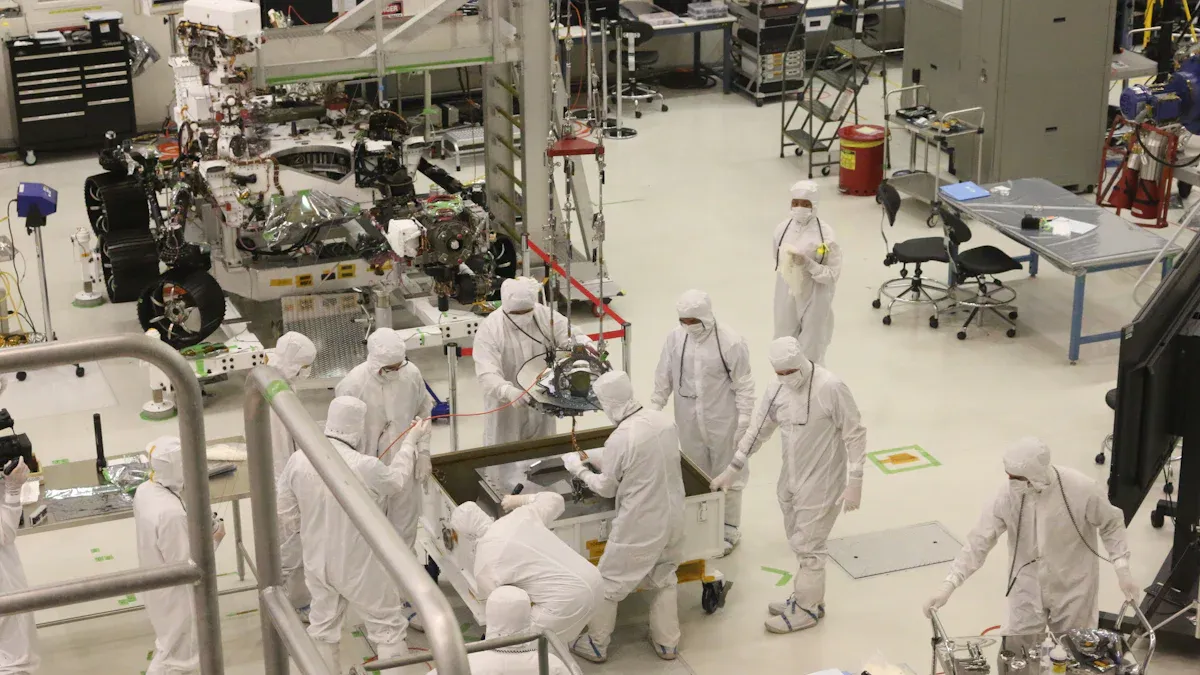
You begin by looking at the cleanroom plans. Then, you check that all parts are made offsite. When the parts arrive, you make sure they match your plans. The steps for putting the cleanroom together are:
Look at the cleanroom plans.
Get and check all prefabricated parts.
Put wall panels, doors, and windows in place.
Lock panels together so there are no leaks.
Hook up power, water, and data lines.
Add lights, floors, and other equipment.
Do a final check to see if everything fits and works.
You also need to wear safety gear and handle materials carefully.
You get the best results when you connect HVAC systems with your cleanroom. You can use your old HVAC system for cooling. Or, you can add new modular HVAC units. Large cleanrooms may need extra central air systems to control heat and keep air clean. Set up ducts and vents to move air and keep the right temperature. Always check for leaks to keep the room clean and keep the pressure right.
Pick the right size HVAC system for your cleanroom.
Make sure air moves in the right direction.
Stop blockages in ducts and vents.
Keep the room sealed to stop contamination.
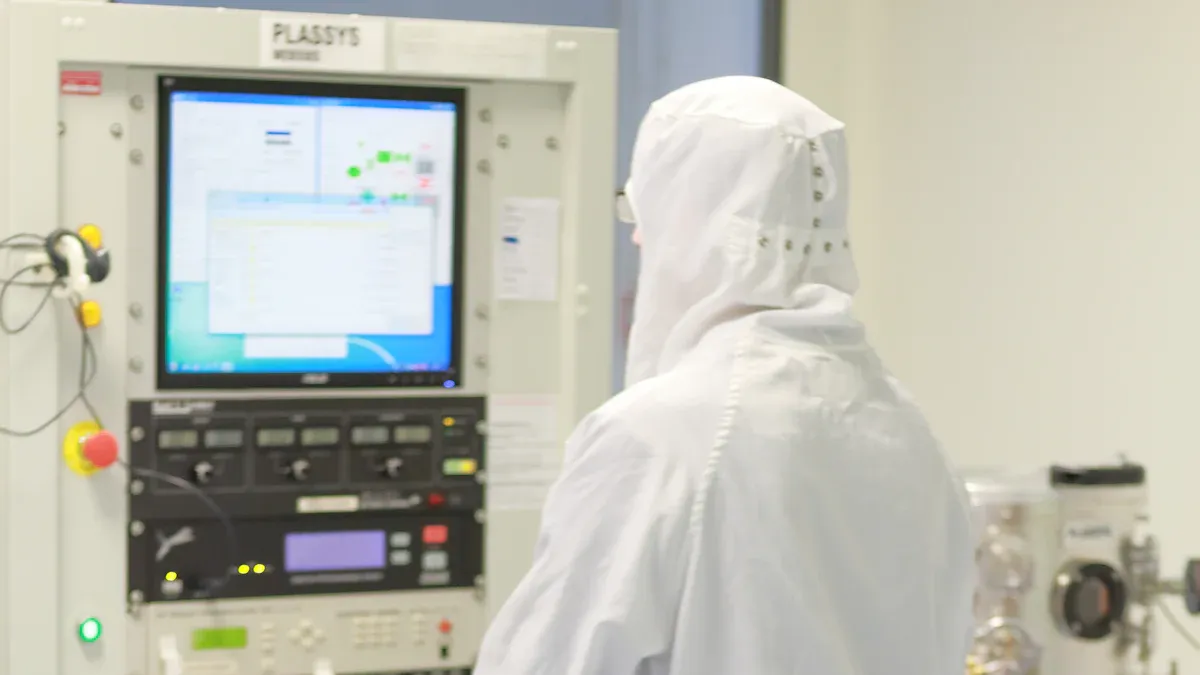
After you build your modular cleanroom, you have to check it. This inspection helps you find problems before you use the room. Inspectors look for things that could make the room unsafe or dirty. They check for contamination, airflow, humidity, cleaning, equipment, and the building itself. Here are some common problems:
Issue Type | Description |
|---|---|
Contamination Control Challenges | Contamination is always a problem, so you need strict rules for gowning, cleaning, and filtering. |
Airflow and Ventilation Issues | Bad airflow can cause air to swirl and pressure to change, which can hurt cleanliness. |
Humidity and Temperature Control | Cleanrooms must keep certain levels to stop static and protect materials. |
Cleaning and Disinfection Practices | If you do not clean well, dust and germs can build up. |
Equipment Malfunction | Broken equipment can stop work and make contamination more likely. |
Structural Integrity Issues | Cracks or damage can let in dirt and make the room less clean. |
You need to fix these problems before you start using the cleanroom. Inspectors use lists to check if your modular cleanroom follows all the rules.
Before you use your modular cleanroom, you must test it. Qualification means you check every part of the room. You follow rules like ISO and GMP. You test the HVAC to make sure it keeps the right temperature and humidity. You check filters to see if they catch particles. You test for germs to set a starting point for later checks. You also check airflow, humidity, temperature, and pressure.
HVAC Calibration makes sure the room stays at the right settings.
HEPA Filter Integrity Test checks if filters work well.
Microbial Contamination Testing gives you a starting point for future tests.
You also check airflow, filter leaks, particle counts, humidity, temperature, and pressure.
After you install the cleanroom, you must test how it works. Testing shows if the room does what it should. You count particles in the air, test airflow, check filters, look for germs, and check pressure. You use laser counters to measure particles. You test airflow to stop contamination. You check filters to make sure they work. You watch pressure to keep air moving the right way.
You follow these steps:
Look at the design plans to see if they meet the rules.
Check the installation to make sure it matches the plans.
Test the systems in a controlled way.
Make sure the room works during normal use.
Airborne Particle Counting checks how clean the air is.
Airflow Visualization and Smoke Studies show how air moves in the room.
HEPA/ULPA Filter Integrity Testing checks if filters are working.
You need to do these tests often to keep your modular cleanroom safe and clean. When you follow these steps, your team and customers will trust your work.
You get the best results when you follow every step. Modular cleanrooms let you finish work faster and change things when needed. You also get accuracy, flexibility, and easy cleaning.
Modular cleanrooms help you start production quickly.
Careful testing makes sure everything works right.
Checking and cleaning often keeps your cleanroom safe.
You should talk to experts and use the best ways to build. Checking your cleanroom often and getting it certified helps you follow rules and keep it working well.
A modular cleanroom uses prefabricated parts. You can build it quickly and change it easily. You get a clean space for sensitive work like labs or manufacturing.
You usually finish installation in 2 to 4 weeks for small cleanrooms. Larger projects may take up to 16 weeks. Planning and site readiness help you save time.
An advanced HVAC system keeps air clean and controls temperature and humidity. You protect products and workers. HVAC Technology (Suzhou) Co., Ltd. offers reliable solutions for modular cleanrooms.
You follow strict cleaning routines. You use HEPA filters, wear special clothing, and monitor air quality. You check for dust and germs often.
You must follow ISO 14644 for air quality. You may need GMP or FDA rules for medicine or biotech. These standards help you keep your cleanroom safe and compliant.


