

Views: 0 Author: Site Editor Publish Time: 2026-04-16 Origin: Site
Every Industrial HVAC System has good points and bad points. You should check what your building needs before you pick one. HVAC Technology (Suzhou) Co.,Ltd. is a top company with smart ideas and lots of experience. They offer smart tools and strong products for different businesses. You get help from planning to putting the system in. If you want cleaner air and lower energy bills, a new hvac system can help you do that.
Look at what your building needs before picking an HVAC system. Think about the building size, air quality, and how much energy it uses.
Learn about the good and bad points of each HVAC type. Every system has special pros and cons that can affect your choice.
Pick a system that saves energy. Models that use less energy can help you save a lot of money on bills.
Make a plan to check and fix your HVAC system often. Taking care of it early can save money and help it last longer.
Think about getting a custom HVAC system if your building has special needs. Custom systems can make the place more comfortable, safe, and efficient.
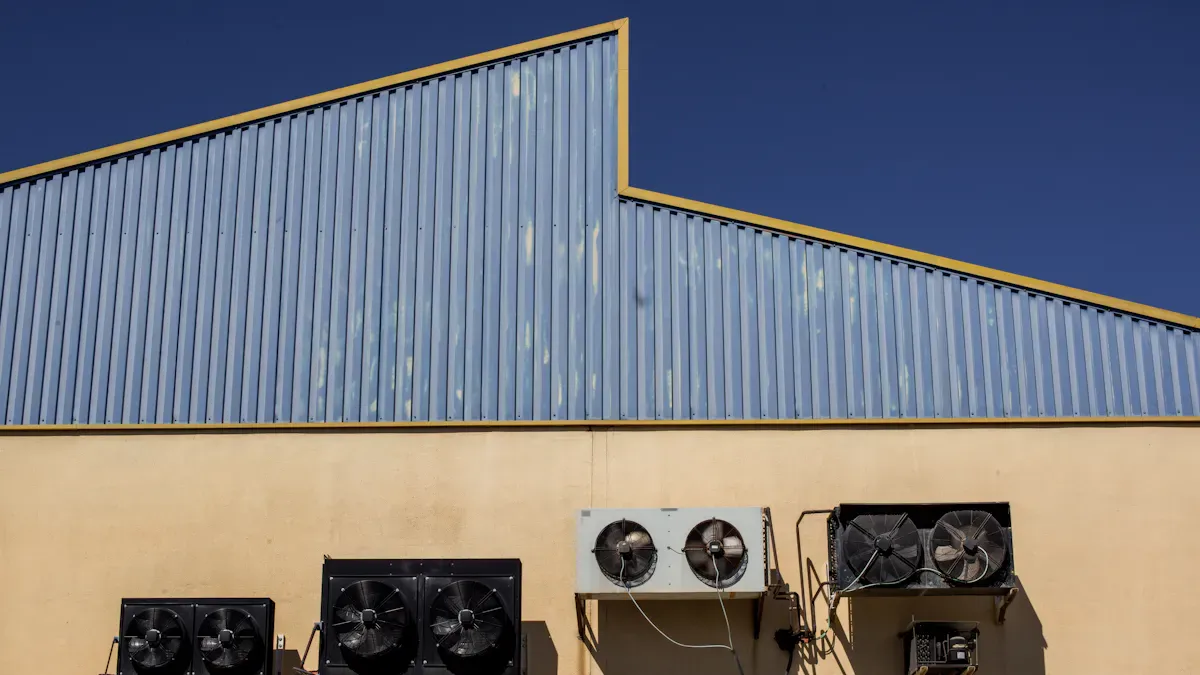
You will find many types of hvac systems in the industrial world. Each one works best for different buildings and needs. When you look for a new system, you should know what options you have. This helps you make a smart choice for your facility.
Here are the main types of hvac systems you will see in this article:
Packaged HVAC Systems
These systems put all the parts together in one unit. You can use them for small or medium buildings.
Split HVAC Systems
These have separate indoor and outdoor units. You get more control over where you place each part.
VRF (Variable Refrigerant Flow) Systems
These systems let you control the temperature in different rooms at the same time.
Geothermal HVAC Systems
These use the earth’s natural heat to warm or cool your building.
Central HVAC Systems
These systems send air through ducts to many rooms at once.
Rooftop HVAC Units
You can place these units on the roof to save space inside your building.
Ductless HVAC Systems
These do not need ducts. You can use them in places where it is hard to install ductwork.
Heat Pump HVAC Systems
These systems can both heat and cool your building by moving heat in or out.
Hybrid Heat Systems
These use more than one energy source to keep your building comfortable.
Cleanroom HVAC Solutions
These systems keep the air very clean for special work areas.
Industrial Dehumidifiers
These machines remove extra moisture from the air.
You will learn about the pros and cons of each type in the next sections. This will help you pick the right system for your business.
If you pick a packaged HVAC system, you get many good things. All the main parts are together in one unit. This is not like split HVAC systems, which have parts inside and outside. You can look at the table to see how they are different:
Feature/Benefit | Packaged HVAC Systems | Other Industrial HVAC Systems |
|---|---|---|
Design | All-in-one configuration | Often modular or split systems |
Space Efficiency | Space-saving, installed outdoors | May require more indoor space |
Maintenance | Easier due to consolidated parts | Can be more complex |
Performance | Built for heavy-duty use | Varies by system type |
Suitability | Great for limited indoor space | Better for larger open areas |
Longevity and Resilience | Stronger than residential units | Varies, sometimes less robust |
You save space because the unit sits outside. It is often placed on the roof. This keeps noise away from work areas. It also helps make the air inside cleaner. Maintenance is easier since all parts are together. The system is ready to use when it arrives. This makes installation faster and cheaper. Packaged HVAC systems are good for big places like warehouses and factories. They give strong heating, cooling, and ventilation.
Packaged HVAC systems have some downsides too. The unit sits outside, so weather can hurt it. Rain or snow can cause rust or damage. If the unit is on the roof, it can be hard to reach. This is true for tall or sloped buildings. These systems may not save as much energy as other hvac systems. You might not find as many high-efficiency choices as with split hvac systems. The outdoor unit can take up a lot of space. This can be a problem if your facility is small. Some people think the units look bad or are noisy outside.
Weather can make the unit wear out faster.
Getting to the roof for repairs can be hard.
Not easy to fit into older buildings.
Think about these good and bad points before you pick a packaged HVAC system for your facility.
Split HVAC systems have many good points. They have indoor and outdoor units. You can put the indoor unit where you want. This lets you control the temperature in each room. It helps you save energy and keeps people comfortable.
Split systems let you set different temperatures for each area. This is helpful for big buildings or places that change often. The indoor unit stays safe from weather and dirt. This makes the air inside better. Split systems use less energy than old units.
Here are some main pros:
You pay less for energy.
You can put units in many places.
You control the climate for comfort.
Indoor air stays clean and safe.
Feature | Split HVAC Systems | Packaged Systems |
|---|---|---|
Design | Indoor and outdoor units are separated | All parts in one outdoor cabinet |
Maintenance | Service both indoor and outdoor units | All parts in one location |
Environmental Impact | Indoor units protected from weather | Outdoor units face weather and debris |
Efficiency | High precision and variable output | Simple and reliable |
Application Suitability | Good for multi-room or variable-use spaces | Best for single-zone buildings |
Space Consideration | Needs more indoor space | Space-efficient |
Split HVAC systems also have some bad points. You need to install two units. This takes up more space inside. Maintenance is harder because you must care for both units. You may spend more time and money on repairs.
Split systems cost more to set up than packaged units. You need skilled workers to install them. It can be tough if your building does not have much space. Some people think indoor units take up space needed for other things.
Here are some main cons:
You need more space and planning.
Maintenance covers both units.
You pay more for setup and labor.
VRF systems have many good points for industrial hvac. VRF means Variable Refrigerant Flow. This lets you set different temperatures in each room. You can make one room cool and another warm. This saves energy and keeps people happy.
VRF systems use smart controls to change refrigerant flow. Each part gets what it needs. You do not waste energy. You can cut your energy bills by almost half. VRF systems are quieter than old hvac systems. Work areas stay calm and peaceful. You do not need lots of ductwork. This makes setup easier and saves space.
Here is a table that shows how VRF systems compare to traditional hvac:
Feature/Benefit | VRF Systems | Traditional HVAC Systems |
|---|---|---|
Efficiency | Higher efficiency due to modulation of refrigerant flow and compressor speed | Generally less efficient with fixed operation |
Customization | Individual temperature control in different zones | Limited zoning capabilities |
Installation | Requires less ductwork and space, easier to install | More ductwork and complex installation |
Noise | Operates more quietly | Typically noisier |
Maintenance | Advanced technology may lead to fewer breakdowns, but specialized servicing needed | Standard maintenance requirements |
Cost | Higher initial costs but long-term savings on energy and maintenance | Lower initial costs but higher long-term expenses |
You can use VRF systems in schools, hospitals, and big buildings. They also work in data centers. VRF systems help keep indoor air clean. They do not move dust and dirt through ducts. You get better control, more comfort, and save money over time.
There are some bad points with VRF systems. The first is the high setup cost. You pay more at the start because the technology is advanced. Maintenance costs can be higher too. You need special training to fix these systems. Not all workers know how to repair them.
VRF systems may need more space inside than some ducted systems. This can be a problem in small buildings. There is a risk of refrigerant leaks. Leaks can lower efficiency and cause safety issues. Repairs can be hard to do. This adds time and cost.
Here are the main cons:
Setup and maintenance cost more
Need special service skills
Possible refrigerant leaks
More space needed inside for some setups
Think about these good and bad points before you pick a VRF system. If you want quiet and efficient heating and cooling, VRF systems are a smart choice. They also help improve indoor air quality. VRF systems can work with heat pumps for even more control.
A geothermal industrial hvac system can help your facility. It gives reliable heating and cooling. You pay less for energy bills. Geothermal hvac systems use pipes underground called ground loops. These pipes move fluid that takes heat from the earth. The heat goes into your building. After the fluid gives up its heat, it goes back underground. The process starts again.
Here is how geothermal hvac works in factories:
Fluid moves through ground loops.
The ground gives heat to the fluid.
The heat warms your building.
The cooled fluid goes back underground.
Geothermal hvac systems have many good points. They can save up to 70% on energy bills. They are very efficient. For every unit of electricity, you get four units of heating or cooling. Geothermal hvac does not make emissions at your site. The underground pipes last more than 50 years. The heat pumps last 20 to 25 years. You get steady comfort all year. Geothermal hvac is quiet. It makes indoor air better and work areas nicer.
You need to think about the downsides before you install geothermal hvac. The site must be right for the system. The ground and land size matter a lot. Local rules can affect what you do. Installation is hard. You need skilled workers and special tools. It is tough to add geothermal hvac to old buildings, especially in cities. Some older buildings cannot fit ground loops well. The first cost is higher than other hvac systems. You must plan well to avoid delays.
Here are the main cons:
The site must have good land and soil.
Installation is hard and needs skilled workers.
Adding to old or city buildings is tough.
Central HVAC systems are used in big buildings. They are large and complex. These systems help control the climate in big spaces. You can set the temperature for different areas. Central HVAC systems have backup parts. This means your building keeps working if something breaks.
Here are some good things about central HVAC systems:
They use less energy. This is good for places that need lots of heating or cooling.
Air quality gets better. New systems have strong filters. These filters catch dirt and make the air cleaner.
You save money over time. You pay more at first, but your bills go down later.
Meeting rules is easier. Upgrading helps you follow energy laws and avoid fines.
Your building becomes more valuable. Efficient buildings attract more people and can charge higher rent.
Central HVAC systems have some bad points too. You might wait longer for equipment. This can slow down your project. You need skilled workers to run these systems. They take up a lot of space. You must plan for big rooms and fuel storage if you use fossil fuels.
Other bad points are:
Fossil fuels make emissions. You need permits and must check them.
Advanced controls mean more work for managers.
The first cost is high. It costs more than smaller systems.
Safety rules are stricter for high-pressure systems.
Lots of pipes make setup harder.
You can find many pros when you choose rooftop hvac units for your facility. These units sit on the roof, so you save valuable ground space. You can use that space for parking, landscaping, or even more building operations. Rooftop hvac units come as a single package, which makes installation simple and fast. Technicians can reach all parts from the roof, so they do not disturb people working inside. This setup also helps keep the building looking neat and clean.
Here are some main pros of rooftop hvac units:
You get better energy efficiency, which lowers your utility bills.
The system improves indoor air quality for everyone inside.
You hear less noise because the unit sits on the roof, away from work areas.
You keep your equipment safe from theft or vandalism.
The unit stays cleaner since it is away from ground-level dirt and pollution.
Rooftop hvac units help keep the building’s design looking good.
You can drain water easily with rooftop gutters.
A rooftop hvac unit also spreads heat and humidity more evenly. This helps your building stay comfortable and efficient. You can use the land around your building for other needs, which is a big plus for growing businesses.
You should also think about the cons before you pick rooftop hvac units. These units face all kinds of weather, like rain, snow, and strong sun. Weather can affect how well the unit works over time. The weight of the unit can press down on the roof and may cause damage, such as leaks or moisture problems. Sometimes, people forget to check rooftop units because they are out of sight. This can lead to missed maintenance and a shorter life for your hvac system.
Here are some common cons:
Exposure to weather can lower efficiency.
Heavy units may harm the roof.
Units may not get regular maintenance.
You need to plan for these challenges. Make sure you check your rooftop hvac units often and keep up with repairs. This will help your hvac systems last longer and work better for your facility.
Ductless hvac systems have many good points for factories and warehouses. You can put these units in places where ducts are hard to install. The small size lets you use them in tight spots. You do not lose energy through long ducts. This helps you save money on your energy bills.
Some main pros of ductless hvac are:
Ductless hvac uses less energy. Your facility spends less money on power.
Indoor air gets cleaner. These systems stop dust and allergens from spreading. Filters help remove bad stuff from the air.
The small design fits in odd spaces. You can use ductless units where other systems do not fit.
Installation is fast and simple. You do not need to break walls or ceilings to add new units.
You can control the temperature in each room.
You should think about the downsides before picking ductless hvac. The first thing is the higher setup cost. Each unit needs its own installation, which can make the price go up.
Some common cons of ductless hvac are:
You must clean or change filters often. It can be hard to reach every unit.
Some people do not like how the units look. Ductless systems sit on walls or ceilings, which may not match every style.
Heating may not be as strong as central systems, especially in cold places.
You might need many units for big rooms. This can make costs and maintenance go up.
Here is a table to compare the pros and cons:
Pros | Cons |
|---|---|
Uses less energy | Higher setup cost |
Cleaner indoor air | More care needed |
Small design | Units show on walls/ceilings |
Easy to install | Not as warm in cold climates |
Works in many spaces | Need more units for big areas |
Ductless hvac gives you more choices and cleaner air, but you need to plan for extra care and higher costs.
A heat pump can heat and cool your building. It moves heat from one place to another. The system uses electricity to do this job. It does not burn fuel like some other systems. This makes it use less energy. You can save money on your energy bills. A heat pump can cut energy use by half compared to old hvac systems.
Here is how a heat pump works:
The evaporator takes heat from the air or ground.
The compressor makes the refrigerant hotter.
The condenser puts heat into your building.
The expansion valve cools the refrigerant again.
The reversing valve lets the system switch jobs.
You get many good things with a heat pump hvac system:
Benefit | Description |
|---|---|
Energy Efficiency | Uses up to 50% less energy than other hvac systems. |
Cost Savings | Makes your utility bills go down over time. |
Dual Functionality | Gives you heating and cooling in one unit. |
Environmental Sustainability | Makes fewer carbon emissions and helps you go green. |
Enhanced Comfort | Keeps temperatures steady and controls humidity. |
Low Maintenance | Has fewer moving parts, so it breaks less often. |
Long Lifespan | Can last 15-20 years if you take care of it. |
Financial Incentives | May let you get rebates and tax credits. |
Adaptability | Works well in many climates, even tough ones. |
There are some limits to heat pump hvac systems. If the temperature inside and outside is close, the system may not work as well. You might need bigger pipes and stronger pumps. This can make costs go up. You need good controls for changing weather. Installing a heat pump can be hard. You need skilled workers and careful planning.
Some challenges are:
Small temperature differences can make the system less efficient.
You need good controls for changing weather.
Installation is tricky and needs expert help.
Hybrid heat systems combine two types of heating. You get a heat pump and a furnace in one setup. This gives you more control over your indoor climate. You can switch between electric and gas heating. The system chooses the best option based on the weather. You save money because the system uses the most efficient method.
You can use a hybrid system in many places. Factories, warehouses, and offices benefit from this flexibility. The system works well in cold and warm climates. You get steady comfort all year. Hybrid systems help you lower your energy bills. You also reduce your carbon footprint.
Here are some main pros:
You get reliable heating and cooling.
The system saves energy and money.
You can use the system in different climates.
You reduce emissions and help the environment.
The system adapts to changing weather.
Hybrid heat systems have some challenges. You pay more at the start. The system costs more than basic hvac setups. You need skilled workers to install and maintain the system. The controls can be complex. You must learn how to use them. Some buildings may not fit hybrid systems well.
You need space for both the heat pump and furnace. This can be hard in small facilities. Repairs may cost more because the system has extra parts. You must check the system often to keep it running well.
Here are some main cons:
Higher upfront cost
Needs skilled installation and maintenance
Complex controls
Space requirements
Possible higher repair costs
A cleanroom hvac system is needed for strict air quality. This system controls temperature, humidity, and tiny particles. It protects sensitive products and important processes. Cleanroom hvac solutions from HVAC Technology (Suzhou) Co.,Ltd. offer advanced features for your workspace.
Here are some main benefits:
Dust and contaminants stay out of your cleanroom.
Temperature and humidity stay steady.
Workers and products are safer.
You meet industry standards for clean air.
Product defects are less likely.
A cleanroom hvac system helps save energy too. Smart controls let you change settings for different needs. These systems work in labs, electronics factories, and medical places. You create a safe and productive environment.
There are some challenges with cleanroom hvac systems. These systems cost more to install and keep working. Skilled workers are needed to run everything. Filters and airflow must be checked often.
Some common drawbacks:
Upfront costs are higher.
Maintenance and inspections are needed often.
Staff must learn strict procedures.
More energy is used to keep air clean.
Think about the pros and cons before picking a cleanroom hvac solution. You get high air quality and safety, but you must spend time and resources.
Industrial dehumidifiers can help your building. These machines pull extra water out of the air. This keeps your equipment and products safe from harm. Too much humidity can cause mold, rust, and germs. Dehumidifiers stop these problems before they happen. The air will feel fresher and cleaner. Workers will breathe better and feel good at work. Dry floors mean fewer slips and falls. Dehumidifiers also help your hvac system work easier. When you control the moisture, your hvac does not work as hard. This saves energy and lowers your bills.
Here are some main benefits:
You stop mold and mildew from growing.
You keep machines and products safe from rust.
You make workers more comfortable and safe.
You help your hvac system last longer.
You spend less money on repairs and energy.
There are some things to think about too. Industrial dehumidifiers use a lot of power. Your electric bills may go up if you run them all day. These machines need to be cleaned and have their filters changed often. If you forget to do this, they may not work well. Some dehumidifiers can be loud. You should think about where to put them. Big dehumidifiers need a lot of space. Make sure you have room for them and for repairs. Sometimes, you must connect the unit to your hvac system. This can make setting it up harder.
Here is a quick look at the drawbacks:
Cons | Description |
|---|---|
Higher energy use | May increase power bills |
Maintenance needed | Filters and parts need cleaning |
Noise | Some units can be loud |
Space requirement | Large units need enough room |
Complex installation | May need hvac integration |
Start by looking at what your building needs. Every facility is different. Check how big your space is. Count the rooms you have. Think about the work you do. Some places need strong ventilation. Others need tight humidity control. If you use chemicals or sensitive items, air quality matters most. HEPA filters can catch tiny particles. Ventilation controls keep air moving. Humidity control stops mold and static.
Indoor air quality
Energy efficiency
Maintenance needs
Special facility needs
HEPA filters
Ventilation controls
Humidity control
Pick an hvac system that matches your needs. This makes your building safer and more comfortable. Central air conditioning works well for big spaces. Ductless systems fit small rooms or special areas.
Think about your budget before picking a system. Some hvac systems cost a lot at first. Advanced technology or bigger units cost more. Installation costs depend on your building size and system complexity. Plan for labor, materials, and upgrades. Some systems need special tools or skilled workers. Custom ductwork or extra controls can raise costs.
Initial cost
Installation cost
Labor and materials
Upgrades and changes
Choose a system that fits your budget and building. Central air conditioning may cost more at first. It can lower your bills later. Compare the first cost with long-term savings.
Energy efficiency is very important when choosing a system. You want a system that uses less energy. This keeps your bills low. High-efficiency models save money and help the environment. Check ratings like SEER, EER, and IEER to see how efficient a system is.
Look at how much energy your facility uses. Maintenance and smart technology also affect efficiency. Sensors and controls help manage your system. This avoids waste and keeps your building comfortable.
Plan for maintenance and service. Regular care keeps your hvac system working well. There are different types of maintenance. Preventative maintenance stops problems before they start. Predictive maintenance uses sensors to find issues early. Reactive maintenance fixes things after they break.
Pick systems that are easy to maintain. Check if parts are easy to get. Regular service reduces downtime and repair costs.
Every facility is unique. You may need a custom hvac solution. Experts can help design a system for your needs. HVAC Technology (Suzhou) Co.,Ltd. offers custom options for factories, warehouses, and cleanrooms. You get help with design, installation, and training. Ask for special features like smart controls, sensors, or unique layouts.
A custom system can make your facility more productive. You save money in the long run.
You need to know the pros and cons of commercial hvac systems before you choose. Look at the features and options for your facility. Think about initial installation cost and long-term cost savings. Ductless mini-split systems can offer improved air quality and exceptional efficiency. Ask experts at HVAC Technology (Suzhou) Co.,Ltd. for help. Get advice that fits your needs.
You should look for systems with high SEER or EER ratings. Geothermal and VRF systems often save the most energy. Always check your building’s needs before you choose.
You should schedule maintenance at least twice a year. Regular checks help your system run better and last longer. Change filters and clean parts as needed.
Yes, you can upgrade parts like controls, filters, or add dehumidifiers. This can improve performance and air quality. Ask an expert to see what upgrades fit your system.
You need to match the system size to your building’s square footage and use. Too small or too large can waste energy. An HVAC professional can help you choose the right size.
Good air quality keeps workers healthy and protects equipment. It also helps you meet safety rules. Use filters and ventilation to keep air clean.


