Views: 0 Author: Site Editor Publish Time: 2026-06-01 Origin: Site
Commercial climate control dictates much more than simple workplace comfort. It actively drives equipment lifespan, employee productivity, and raw product integrity. It also represents a massive portion of your operational energy overhead. High capital and operational expenditures make this a high-stakes business decision. Choosing the wrong setup drains facility budgets rapidly. Selecting the ideal industrial HVAC system requires looking far beyond upfront hardware prices. You must evaluate long-term financial efficiency, environmental compliance, and specific facility applications. You also need to protect business continuity during the upgrade. In this guide, you will learn how to assess your structural constraints. We will explore core cooling technologies built for commercial use. Finally, you will discover how to structure a bulletproof vendor request for proposal (RFP) to secure the best infrastructure investment.
Facility application dictates the technology: general comfort cooling requires a vastly different approach than precision manufacturing or data center environments.
Total Cost of Ownership (TCO) should drive the decision, factoring in energy efficiency, maintenance frequency, and expected equipment lifecycle over a 15–20 year horizon.
Regulatory compliance and environmental standards (such as refrigerant mandates and indoor air quality codes) strictly govern commercial HVAC selection and installation.
Evaluating vendor service level agreements (SLAs) and implementation downtime is as critical as the hardware selection.
Every commercial building demands a unique environmental strategy. You cannot simply buy off-the-shelf equipment and expect peak performance. You must first analyze your exact operational needs.
You must differentiate between distinct types of facility cooling. General comfort cooling keeps office personnel productive. Process cooling directly prevents heavy machinery from overheating. Strict environmental control protects highly sensitive materials like pharmaceuticals. If you run a mixed-use facility, you need a hybrid approach. A warehouse storing stable goods needs basic ventilation. A secondary manufacturing wing inside that same warehouse requires aggressive temperature management.
Physical space severely limits your equipment choices. You must assess all available real estate. Rooftop installations save ground space but require immense structural support. Ground-level pads offer easier maintenance access but consume valuable exterior property. Indoor mechanical rooms protect equipment from harsh weather. You must also evaluate your need for independent climate zones. Different departments often require vastly different temperature baselines simultaneously.
Retrofitting an older building presents unique engineering challenges. You need to evaluate the viability of your existing ductwork. Older ducts might leak or lack the volume capacity for modern systems. Electrical panels often require expensive upgrades to handle new industrial loads. Structural engineers must verify roof load limits before you place heavy multi-ton units overhead. New builds avoid these legacy issues but demand rigorous upfront architectural planning.
System failures cost businesses millions annually. You must define your acceptable limits of downtime. If a server room loses cooling, hardware destruction happens in minutes. If an office loses cooling, you merely lose a day of productivity. Calculate the exact financial impact of a system failure. This calculation justifies the extra cost of redundant backup cooling units.
Selecting the proper equipment category ensures long-term operational stability. Different technologies serve entirely different physical layouts.
Packaged RTUs house all cooling and heating components inside one cabinet. They sit on the roof and connect directly to building ductwork. This all-in-one footprint efficiency makes them incredibly popular for expansive retail spaces. Split systems separate the condenser outside from the evaporator inside. They require specialized refrigerant routing. Split setups work exceptionally well when roof access is completely unavailable.
Large-scale facilities rarely rely on standalone units. They utilize an AHU(Air Handling Unit) to manage complex air distribution. The AHU conditions the air and forces it through the ductwork. It manages crucial ventilation rates and filters incoming air. It integrates directly into broader centralized setups featuring massive external chillers or industrial boilers. The AHU essentially acts as the mechanical lungs of your entire building.
Standard cooling systems often fail in sensitive environments. They fluctuate too widely between cooling cycles. Laboratories, cleanrooms, and data centers demand absolute environmental stability. These applications require Constant Temperature And Humidity Air Conditioners. These specialized units micro-manage both sensible heat (temperature) and latent heat (moisture). They run continuously at variable speeds to prevent devastating humidity spikes. Standard Industrial Air Conditioners simply lack this granular precision.
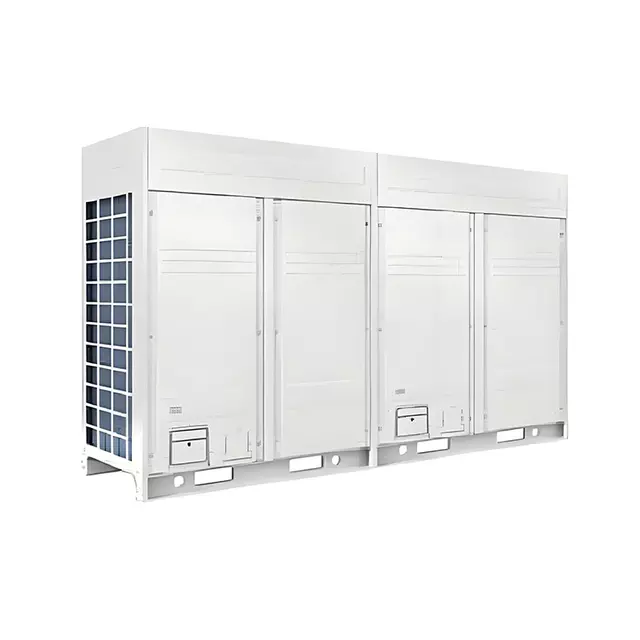
VRF systems offer unmatched scalability. They pump precise amounts of refrigerant to multiple indoor fan coils. One exterior condenser can connect to dozens of distinct indoor zones. Some VRF setups provide simultaneous heating and cooling. You can cool a sun-facing office while heating a shaded conference room on the same circuit. This flexibility significantly drastically lowers monthly energy consumption.
Hardware selection requires strict mathematical justification. You must balance upfront capital with projected lifetime utility costs.
Contractors used to guess system sizes based solely on square footage. This outdated method causes severe operational failures. You must demand rigorous engineering calculations. Industry standards like Manual N dictate exact capacity requirements. These calculations measure heat generated by occupants, sunlight, lighting, and heavy machinery. They measure both sensible heat and latent heat loads. Accurate math ensures you never buy inadequate hardware.
You must compare different efficiency ratings to project your long-term utility costs. Higher ratings usually demand higher initial purchase prices. However, they drastically reduce monthly energy bills.
Metric | Definition | Best Application |
|---|---|---|
EER (Energy Efficiency Ratio) | Measures cooling output divided by electrical input at a strict peak temperature (usually 95°F). | Evaluating maximum load efficiency during peak summer days. |
IEER (Integrated EER) | Measures efficiency across a variety of partial loads and seasonal temperatures. | Projecting realistic annual energy costs in fluctuating climates. |
COP (Coefficient of Performance) | Measures heat output relative to electrical energy consumed. | Evaluating the heating efficiency of commercial heat pumps. |
Over-sizing equipment destroys indoor air quality. An oversized unit cools the space too quickly and shuts off. This rapid cycling prevents the system from removing airborne moisture. High humidity leads directly to mold growth. Conversely, under-sized systems run continuously. They experience premature wear and fail to meet peak summer demand. Right-sizing guarantees the system operates exactly as engineered.
Evaluating your investment requires a comprehensive lifecycle view. Do not just look at the invoice for the hardware. You must calculate the initial purchase price plus complex installation labor. Add projected annual utility costs over twenty years. Include the cost of mandatory preventative maintenance contracts. Deduct any applicable government energy rebates. This formula reveals the true cost of operating your facility.
Commercial climate control operates under strict municipal and federal oversight. Ignoring these regulations invites heavy fines and premature equipment obsolescence.
The global HVAC industry is rapidly evolving. Environmental Protection Agency (EPA) mandates actively phase out high-GWP (Global Warming Potential) refrigerants. Older compounds like R-410A are exiting production. Purchasing equipment reliant on phased-out refrigerants guarantees massive future servicing costs. You must ensure your new equipment utilizes next-generation, low-GWP refrigerants. This compliance extends the viable lifespan of your infrastructure.
Indoor air quality (IAQ) directly impacts worker health and legal liability. You must adhere to strict ASHRAE standards for fresh air intake. Commercial spaces require specific air exchange rates per hour. Filtration minimums also matter heavily. Standard fiberglass filters offer zero protection against fine particulate matter. Upgrading to MERV 13 or higher captures bacteria, smog, and fine dust. You must also route exhaust safely away from intake vents.
Municipalities strictly govern how and where you install exterior equipment. City noise ordinances often restrict decibel levels at the property line. Commercial chillers generate significant noise. You might need to install expensive acoustic baffling to remain legally compliant. Structural safety codes also dictate wind-load resistance and seismic tie-downs for rooftop units.
Purchasing the equipment represents only half the battle. Executing a seamless installation requires intense logistical planning and risk management.
Replacing infrastructure usually requires shutting off existing climate control. You must protect your business continuity during this window.
Phased Rollouts: Replace one zone at a time rather than upgrading the entire facility simultaneously.
Temporary Cooling: Rent commercial spot coolers or trailer-mounted chillers to keep critical zones operational.
Off-Hours Installation: Schedule crane lifts and heavy electrical tie-ins during nights or holiday weekends.
You cannot buy specialized commercial units on short notice. Current manufacturing delays heavily impact project timelines. Custom-built components often require months of lead time. You must factor these delays into your replacement schedule. Never wait until your current setup fails completely before ordering new hardware. Proactive ordering prevents catastrophic facility closures.
Hidden installation costs derail facility budgets rapidly. Heavy equipment placement usually requires crane rentals. You might need to close public streets and pay for traffic control. Aging roofs often require expensive steel reinforcements before accepting new hardware. Upgrading electrical panels to support larger amperages introduces further delays. Always account for these secondary structural modifications.
The contractor you select heavily influences the ultimate success of your project. You must filter vendors through strict operational criteria.
Never hire residential technicians for commercial projects. You need contractors possessing specific industrial experience. Verify their state licenses and commercial bonding limits. Ensure they hold active certifications from major equipment manufacturers. A poorly trained contractor will ruin expensive hardware during the initial startup sequence.
Read the fine print on all manufacturer guarantees. Dissect the difference between parts warranties and labor warranties. Manufacturers often cover broken compressors for five years but refuse to cover the labor required to replace them. Understand exactly what actions void these guarantees. Skipping mandatory seasonal maintenance usually nullifies your warranty instantly.
Post-installation support determines your long-term success. Evaluate proposed maintenance contracts carefully. Look for guaranteed emergency response times. If your equipment fails on a Friday night, you need a technician on-site within hours, not days. Ensure the vendor maintains a deep inventory of local replacement parts. Waiting weeks for a proprietary circuit board is unacceptable.
Formulate a highly structured Request for Proposal (RFP). Clearly define your facility parameters. Include precise Manual N load requirements. State your acceptable ROI timelines and energy efficiency goals. Distribute this RFP to three highly vetted commercial contractors. Compare their bids based on engineering merit, not just the lowest proposed price.
Selecting the correct system functions as a massive infrastructure investment, not a routine consumable purchase. You must precisely match the chosen technology to your daily operational demands. A standard rooftop unit serves retail spaces beautifully, but precision manufacturing demands highly specialized constant temperature units. Navigating efficiency metrics, local codes, and structural load limits requires deep professional expertise. Your immediate next action should be initiating an engineering-led facility assessment. Hire an independent engineer to map your load requirements before you ever solicit contractor bids.
A: Most commercial systems last between 15 and 20 years. However, this benchmark depends entirely on proactive maintenance and operating conditions. Coastal environments with corrosive salt air or heavy industrial zones often degrade exterior components much faster. Skipping seasonal coil cleanings will drastically reduce this expected lifecycle.
A: You calculate lifetime financial metrics using a simple formula. Add your initial capital expenditure (CapEx) to your final installation costs. Then, add your projected lifetime energy costs and your lifetime maintenance contract fees. Finally, subtract any energy rebates or end-of-life salvage value. This provides your true long-term investment figure.
A: Standard units struggle to manage sensible heat ratios found in server rooms. They cycle on and off, causing dangerous humidity fluctuations. Data centers require Constant Temperature And Humidity Air Conditioners. These systems run constantly to remove immense heat loads while tightly managing moisture to prevent static discharge or hardware corrosion.
A: The AHU(Air Handling Unit) acts as the central distribution lung of your building. It does not generate cold or heat itself. Instead, it connects to external chillers or boilers. It draws in fresh air, filters out contaminants, conditions the temperature, and forces that treated air throughout your facility's ductwork.